Letter E Coloring Pages
Letter E coloring pages help young children learn the shape of E and words that start with it, such as egg, elephant and eagle. Pages range from very simple for toddlers to medium for early readers.
Very simple letter e coloring pages ages 2-4
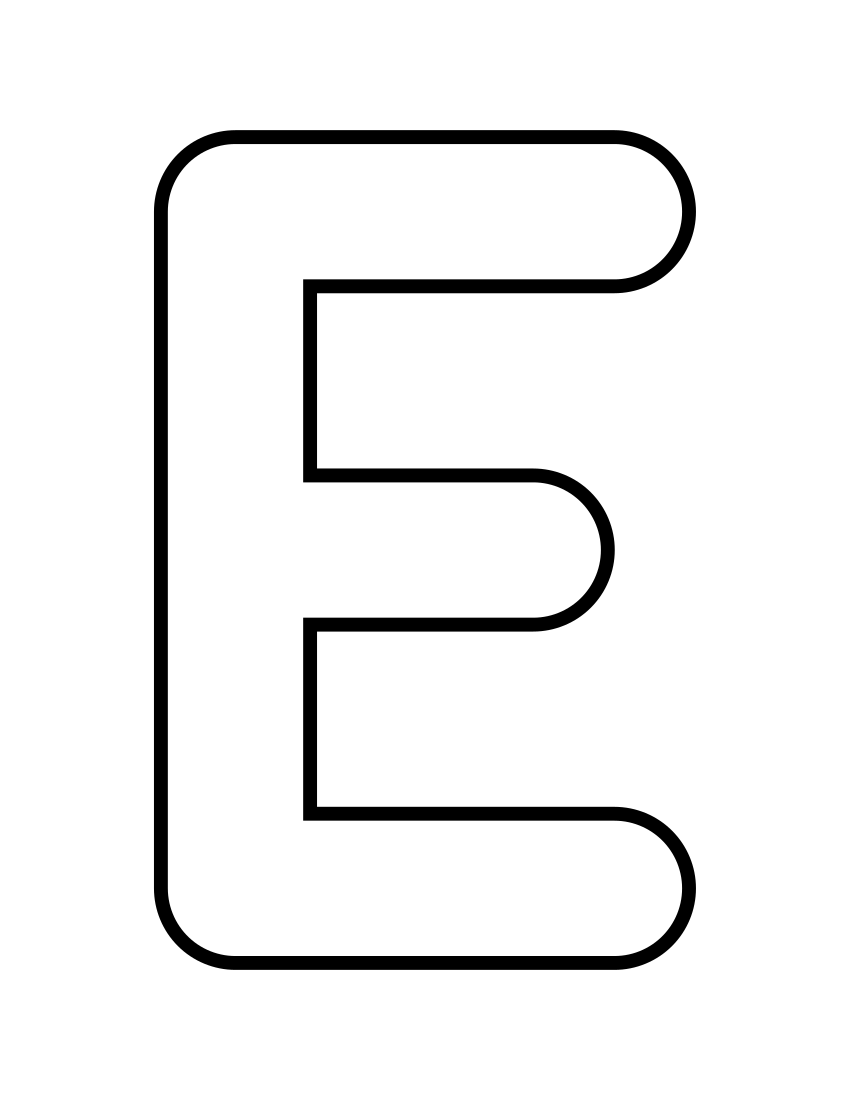
Easy letter e coloring pages ages 3-6
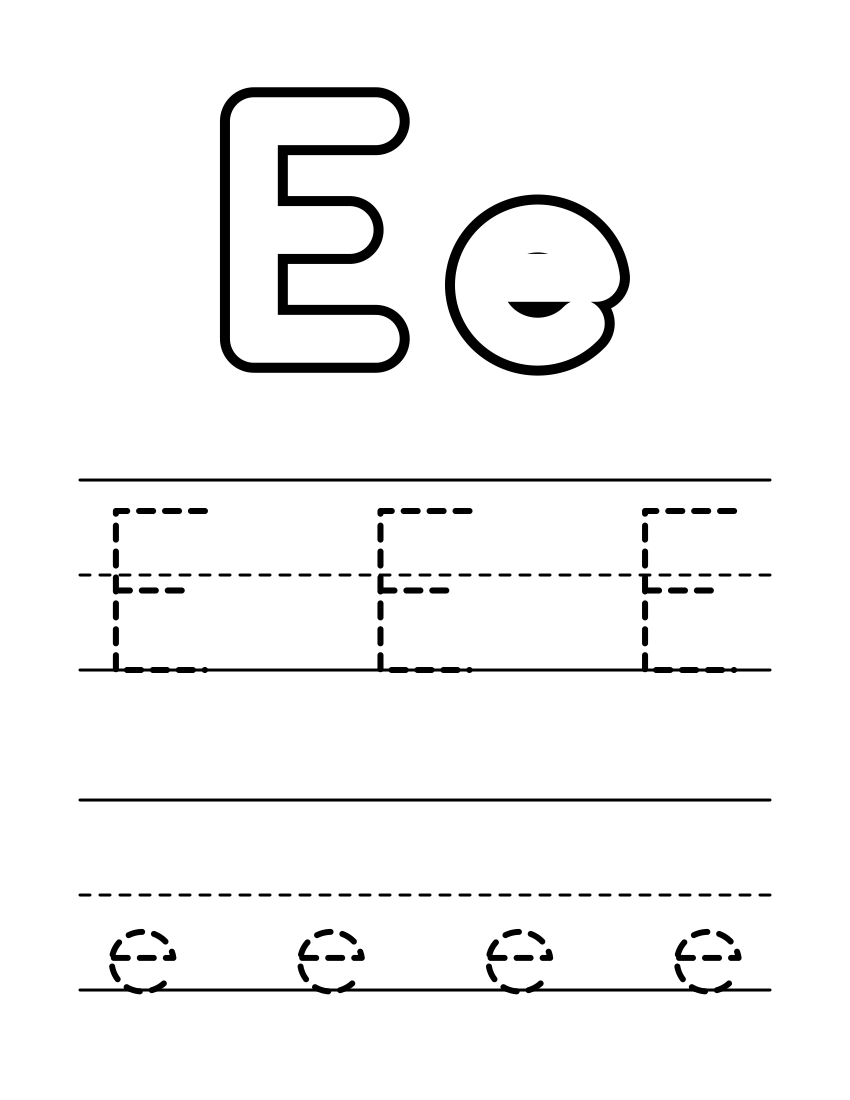
Medium letter e coloring pages ages 6-10
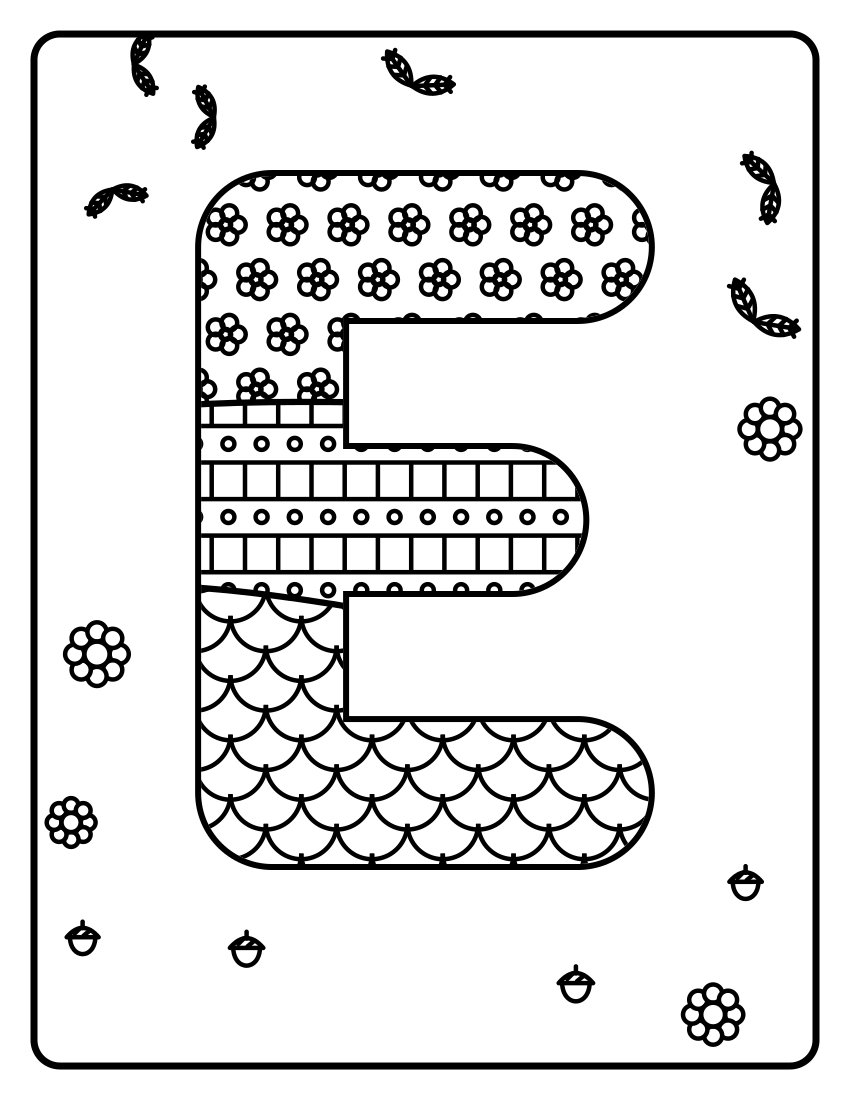
Detailed letter e coloring pages ages 10+ and adults
E is the most used letter in written English, so kids will spot it everywhere once they know it. Talk about the short E in egg, elf and elephant, and the long E in eagle and eel. Gray elephants, brown eagles with white heads and speckled eggs give real-life color ideas. In spring, egg words fit right in with seasonal crafts.
Capital E has one tall line and three short lines going across. Ask your child to color each short line a different color and count them out loud. It turns letter practice into a quick counting game too.
Fun facts to share while you color
- E is the fifth letter of the English alphabet.
- E is the most common letter in written English.
- E is a vowel and can make a short sound, as in egg, or a long sound, as in eel.
- A silent E at the end of a word changes the vowel sound, turning cap into cape.
- On a compass, E stands for east, the direction where the sun rises.
Ways to use these letter e pages
- Hunt for the letter E on cereal boxes and signs and make a tally mark for every one you find.
- Cut out paper egg shapes, decorate them with stripes and dots, and glue them around the colored E.
- Write cap, kit and hop on paper, add a colored E cutout to the end of each, and read the new words together.
- Make an elephant E by gluing paper ears and a long paper trunk onto the finished letter.
Questions parents and teachers ask
What is the silent E rule?
When an E comes at the end of a short word, it is usually silent but makes the vowel before it say its name. For example, kit becomes kite and hop becomes hope.
Why is E such an important letter to learn?
E is the most common letter in English and appears in many short words like the, he and me. Recognizing it early helps children read their first sentences.