Geometric Coloring Pages
Geometric coloring pages are made of triangles, squares, hexagons, circles and stars that fit together into patterns. They suit adults and teens who like order and clean lines, with large shapes for easy sessions and small, tight patterns for longer ones.
Easy geometric coloring pages ages 3-6
Medium geometric coloring pages ages 6-10
Detailed geometric coloring pages ages 10+ and adults
More ways to browse
Geometric designs reward planning. Try coloring all shapes of one kind in the same color, or use light, medium and dark tones of a single color to make flat shapes look like 3D cubes. Gradients that move across the page from one color to another also work well. These pages double as math helpers for older kids learning shapes, symmetry and tessellation.
Keep a ruler nearby when using markers so the color stays inside straight edges. For a 3D effect, pick one light direction and always color the faces toward it lightest.
Fun facts to share while you color
- A tessellation is a pattern of shapes that fit together with no gaps or overlaps.
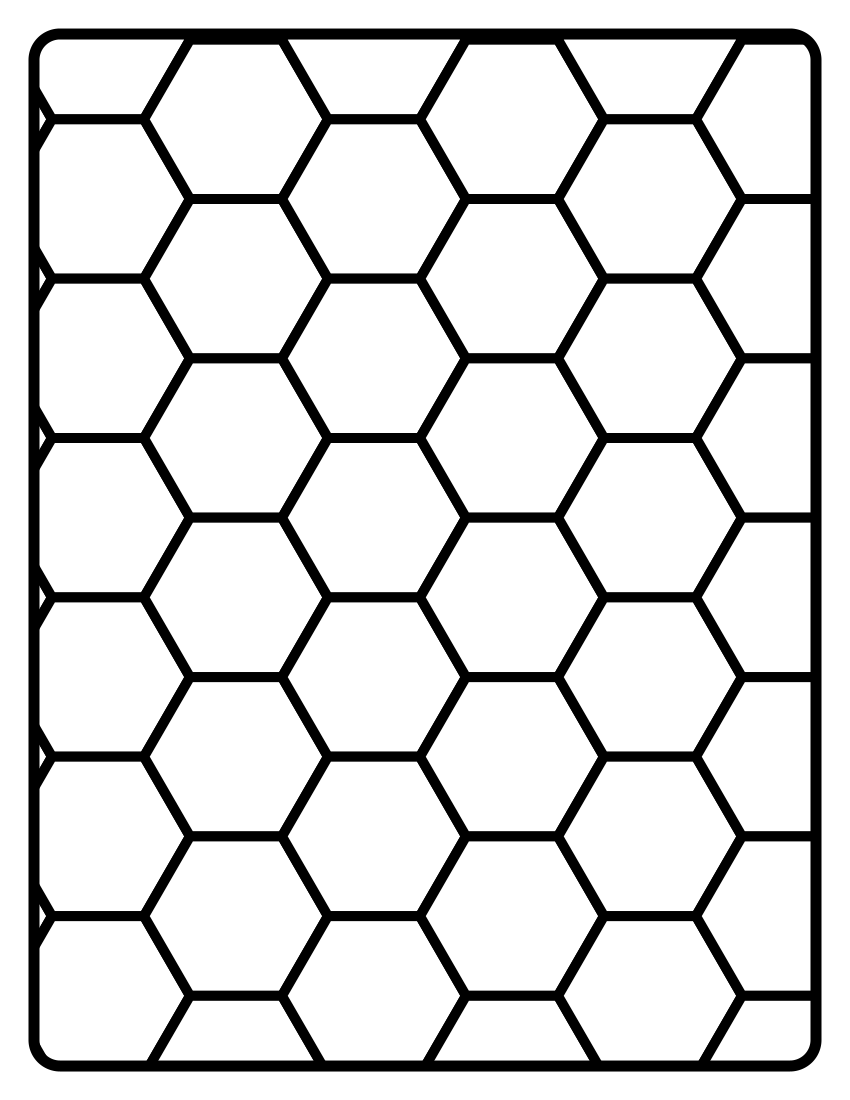
- Bees build honeycombs out of six-sided shapes called hexagons.
- Triangles, squares and hexagons are the only regular shapes that tessellate on their own.
- Islamic art is famous for detailed geometric patterns made of stars and polygons.
- Snowflakes usually grow with six sides or six points.
Ways to use these geometric pages
- Color each type of shape a different color, then count how many of each are on the page.
- Use three shades of one color to turn flat diamonds into cubes that seem to pop out.
- In math class, ask students to find tessellations and lines of symmetry before coloring.
- Color a gradient from one corner to the other and frame the finished page as wall art.
Questions parents and teachers ask
How do I choose colors for a geometric design?
Start with a rule, such as one color per shape type or a gradient across the page. A rule keeps a busy pattern from looking random.
How can I make geometric shapes look 3D?
Choose where the light comes from and use light, medium and dark versions of one color on the faces. The lightest faces point toward the light.
Can geometric pages help with math?
Yes. They are useful for naming shapes, finding symmetry and showing how tessellations fit together, especially for kids around ages 8 to 12.